At just 14 years old, I found myself stepping on the scale multiple times a day, sometimes five, ten, or even fifteen times. I was searching for that elusive magic number that seemed to dictate my entire mood. If the number went up, my day was ruined. If it went down, I felt a moment of cautious pride, but I would quickly check again within the hour to ensure it hadn’t changed. My singular focus was to be smaller — smaller at any cost. The obsession with being thin overshadowed everything: friendships, sports, and most importantly, my health.
At 19, I sat in yet another therapist’s office, my expression sour. “You know this could kill you, right?” she said solemnly. “Maybe not today or tomorrow, but your body can’t endure this forever.” I stared blankly at her, uninterested in recovery. The idea of being sick felt familiar and comfortable. “Is there anything more valuable to you than being thin? What about the possibility of starting a family someday? Would you prefer to be able to have children or to remain thin?” I didn’t hesitate to respond, “Thin,” and we sat there in silence.
At 22, I finally tossed the laxatives away. Tired of feeling unwell, I began to consider the possibility that there might be something more fulfilling than counting almonds and measuring my thighs. “There has to be something beyond this,” I thought, yearning for a higher purpose.
At 23, I started dating my now-husband. He offered me a sense of safety I had never known. “You’re so irreplaceable it’s scary,” I confided in him. As I exercised obsessively, he silently hoped my heart would hold up. One day, he firmly told me, “I won’t marry you until you get your life together. I can’t be in a relationship with you and your eating disorder. When will we be more significant than the number on the scale?”
At 24, I made a peace offering with my body. “Okay,” I thought, “I give up. Just be what you need to be. I may not love you, but I’m done using you as my punching bag.” The following year, we got married, and I graduated with my doctorate in psychology. Life began to feel vibrant, and I found higher aspirations than just being thin. A delicate sense of contentment enveloped me.
“What if I’ve ruined my chances?” I whispered to my husband one night. “What if I’ve compromised my ability to have children after all those years of mistreatment?” At 27, we decided to start a family. Though I was terrified of carrying a child, I calmed myself with the thought of this new and exciting goal: “A family of our own. Yes, that’s right.” I started to see my body as a vessel for something greater than thinness — a means to create life.
At 28, pangs of anxiety began to creep in. Each negative pregnancy test felt like proof that I wasn’t healed or worthy of motherhood. Watching my younger sister give birth, I questioned, “What’s wrong with me?” “What if I messed it up?” I whispered again to my husband. “What if I took away my own chance to have children?” He reassured me softly, “It will happen. It has to.”
At 30, I felt hopeless. After two years of failed IUIs and IVFs, I told myself, “You were never meant to be a mother.” The doctor’s words echoed in my mind: “Your history of an eating disorder might play a role in your struggles to conceive.” Memories of my past flooded back, where I had chosen being thin over motherhood.
Life seemed unjust, and bitterness took root. “Get your pregnant belly away from me,” I’d think angrily as I saw expectant mothers. The apple I had hoped to reach for felt like a distant illusion. The body I had long controlled was now in charge, and it was just as resistant as I had once been. “I stopped hurting you, so now you need to cooperate,” I demanded as I jabbed hormone injections into my stomach. My resentment grew as bruises spread across my skin.
At 31, I declared, “One last attempt.” The constant hormone fluctuations, tears, and testing had taken their toll. “Just one more embryo,” I told my husband, “Then we’ll find another way to find happiness.” After transferring the embryo, the doctor gave my shoulder a reassuring touch. “You have all the potential in the world,” she said, and I felt a tear slip down my cheek.
Two weeks later, I took a pregnancy test, fully expecting disappointment. “Of course, I’m not pregnant,” I thought. But as I glanced back, I saw the positive result flash at me. “Will it disappear if I pick it up? What do I do?” After years of negative tests, I barely knew how to process this new reality. I stood there, frozen, before finally picking it up with trembling hands.
“You’re pregnant!” confirmed the nurse on the phone. My husband and I erupted into cheers, and my mother and sister, who had been with me on this journey, cried tears of joy. I gazed down at my body and thought, “What now?” My body seemed to respond, “You bloom.”
At 18 weeks pregnant, I had lunch with a colleague who remarked, “You look great! I wouldn’t even guess you’re pregnant.” I smiled but felt a pang of panic about the future. “What will happen when it’s obvious?” I worried. At 20 weeks, I stepped on the scale at the doctor’s office, seeing a number I had never encountered before. “Great job!” the nurse exclaimed. “Your weight gain is right on track!” I was puzzled. For so many years, that number had been my enemy. Now, we celebrated its increase? I silently apologized to my body, “Thank you for growing anyway.”
By 21 weeks, I felt a flutter from within. “Is that you?” I asked, sitting still with my hands on my stomach. Another flutter! “The baby’s moving!” I screamed into the phone, and my husband urged me to let him feel it when he got home. Cradling my growing belly, I breathed in gratitude. “I’ll take care of you,” I whispered to my baby, preparing meals that seemed to satisfy its cravings. “Thank you,” my body replied softly.
So many years of striving for less, and now we were celebrating more. At 25 weeks, I met friends for dinner, and one said, “You look adorable!” I reflected on how society finds beauty in growth during this particular time in life. “Breathe,” I reminded myself. “Thank your body for this transformation.”
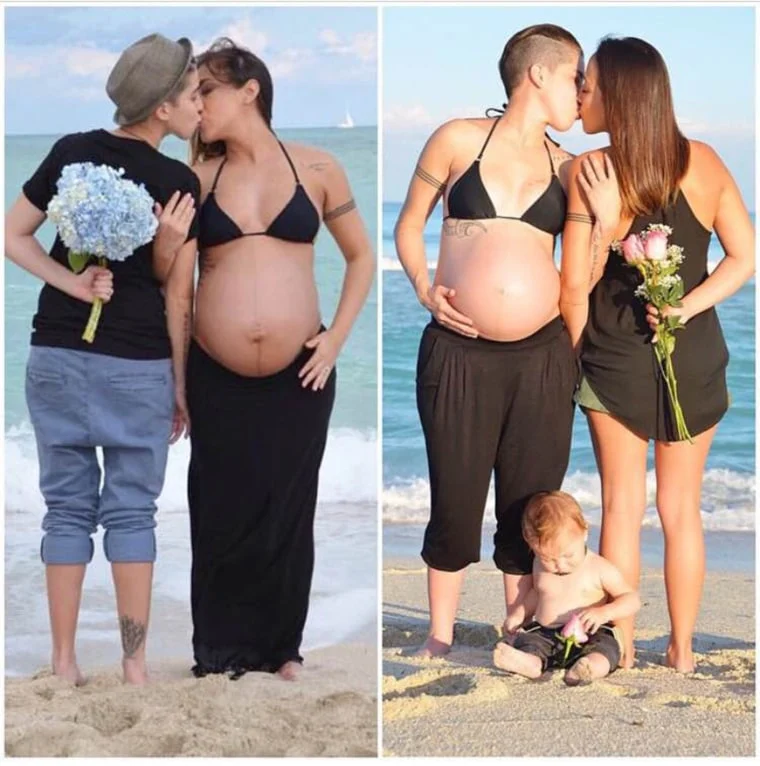
“Adorable?” I scoffed at my body. “You are magnificent and expansive, growing and healing me in ways I never imagined.” I realized the journey ahead might not be easy. “But I’ve chosen to embrace the challenge,” I said to my body. This time, I didn’t need a response; a gentle kick from within affirmed our bond. My dreams felt tangible, and I was ready to continue blooming throughout the rest of this pregnancy.
Conclusion
In summary, the journey from self-abuse to self-acceptance is profound, especially in the context of pregnancy. This narrative illustrates the transformation of a woman who once prioritized thinness above all else, eventually learning to appreciate her body for its incredible capability to nurture life. Through the ups and downs of her fertility journey, she evolves, embraces her changing body, and looks forward to the future with hope and gratitude.